A grinding noise when you press the brake pedal is one of the more alarming sounds a car can make, and for good reason. In most cases, it means your brake pads have worn down past their usable material and metal is now grinding directly against metal, but there are a few other possible causes worth understanding as well.
Worn Out Brake Pads
Brake pads are designed with a small metal wear indicator built into the pad material itself, and this indicator is specifically engineered to create a high pitched squealing sound once the pad gets thin enough to need replacement soon. If that squealing goes unaddressed, the pad material eventually wears down completely, and what you hear next is the sound of the metal backing plate grinding directly against your rotor, which is the grinding noise most drivers associate with severe brake wear. This is not just a noise issue, it means you have lost a meaningful amount of stopping power and are actively damaging your rotors every time you brake.
This progression from squealing to grinding typically does not happen overnight, which is exactly why the earlier squealing stage matters so much. Drivers who catch the squeal and schedule a pad replacement promptly avoid the more expensive rotor damage that comes with letting the pads wear all the way down to bare metal, making that initial warning sound one of the most valuable, and most commonly ignored, signals your car gives you.
Damaged Or Warped Rotors
Rotors can develop grooves, scoring, or warping over time, particularly once metal to metal contact from worn pads has already begun damaging the rotor surface. A rotor with significant damage can produce a grinding or grating sound even if you have already replaced the pads, since the damaged rotor surface itself is now the source of the noise rather than the pad material.
Debris Caught In The Brake Assembly
Small rocks, road debris, or even accumulated brake dust can occasionally become lodged between the brake pad and rotor, or within the caliper assembly itself, producing a grinding or grating sound that may come and go depending on wheel position or driving conditions. This is a less common cause than worn pads, but it is worth ruling out, especially if the grinding sound appeared suddenly after driving through an area with loose gravel or significant road debris.
Worn Or Failing Caliper Components
A caliper that is not functioning properly, whether from a seized slide pin or worn hardware, can cause a brake pad to sit unevenly against the rotor, sometimes producing a grinding sound that seems inconsistent or is more noticeable on one side of the vehicle than the other. This kind of caliper related issue often accompanies uneven pad wear, which a technician can identify during a visual inspection of the brake assembly.
Rear Drum Brake Issues
If your vehicle uses drum brakes on the rear wheels, a grinding sound can also stem from worn brake shoes reaching the end of their usable material, similar to the pad wear scenario but specific to a drum brake setup rather than a disc brake system. Drum brake components can also develop noise from dirt or debris accumulation inside the drum itself, which is less immediately visible than the equivalent issue in an open disc brake system.
Why This Noise Should Never Be Ignored
A grinding noise during braking directly indicates reduced stopping performance, and continuing to drive with this symptom risks further damage to your rotors, calipers, and other brake components beyond what a straightforward pad replacement would have addressed if caught earlier. Metal to metal contact generates significant heat and wear with every stop, meaning the problem tends to worsen quickly rather than remaining stable, and what might have been an affordable pad replacement can turn into a more expensive rotor replacement or caliper repair the longer it continues.
Beyond the cost consideration, reduced braking performance is a genuine safety concern, particularly in a city like Los Angeles where dense traffic means frequent, close quarters braking is simply part of daily driving. If you have also noticed a starting issue alongside brake concerns, our guide on the top 10 reasons your car won’t start and how to get back on the road covers a range of causes worth ruling out separately.
What To Do If Your Brakes Are Grinding
If you notice a grinding sound when braking, it is worth having your brakes inspected as soon as possible rather than continuing to drive on them for an extended period. In the meantime, driving more cautiously, allowing extra following distance and avoiding hard, sudden stops, reduces some of the immediate risk while you arrange an inspection, though this should be treated as a temporary measure rather than a long term solution.
Why LA Driving Conditions Make This Worse
Los Angeles traffic involves an unusually high volume of stop and go braking compared to a less congested city, since dense traffic on routes throughout the city means drivers are constantly slowing and stopping rather than cruising steadily. This pattern accelerates brake pad wear considerably faster than the same mileage would produce in lighter traffic, which is part of why LA drivers often need brake service more frequently than the standard maintenance interval would suggest based on mileage alone.
This means the window between a pad first starting to squeal and reaching the point of grinding can close faster for LA drivers than it would for someone doing mostly highway driving elsewhere, simply because each commute involves so many more individual braking events. Checking brake pad thickness a bit more proactively than the standard interval suggests is a reasonable habit for anyone regularly navigating the city’s more congested corridors.
Why A Mobile Mechanic Fits This Situation Well
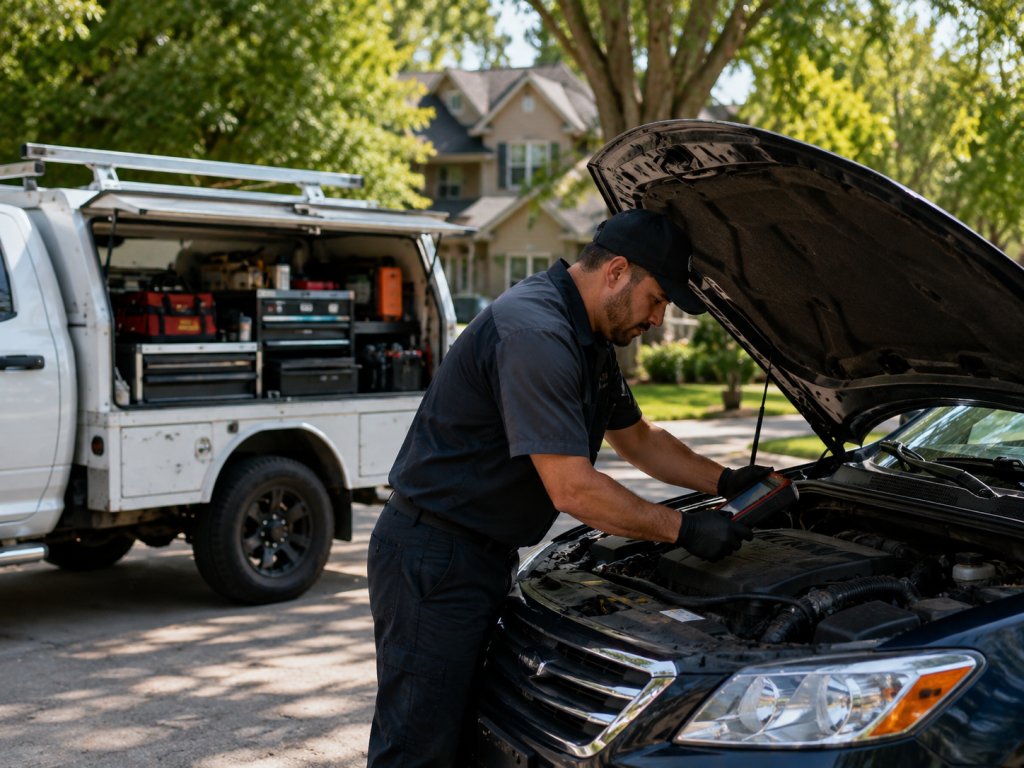
Given the safety concerns tied to a genuine grinding noise, having a technician come to you rather than risking a drive to a shop with compromised brakes is often the safer and more practical choice. A mobile mechanic can inspect your pads, rotors, and calipers right at your home or workplace, and in many cases complete a needed repair on the spot rather than requiring a separate shop visit.
We covered the broader advantages of this approach in our article on why mobile mechanics are better than traditional auto shops in Los Angeles, which explains how convenience and prompt service come together, particularly valuable for a brake issue you would rather not drive around with for long.
Get Your Brakes Inspected Before The Problem Grows
A grinding noise when braking almost always points toward worn pads or rotor damage, though caliper issues, debris, and drum brake wear are also worth ruling out depending on your specific vehicle and symptoms. Catching the earlier warning squeal before it ever reaches this point is always the better outcome, but even once grinding has started, prompt attention limits how much additional damage occurs.
If your brakes have started grinding, visit our homepage to learn more about our services, or reach out through our contact us page to schedule a visit at your home or office anywhere in the Los Angeles area.
Addressing a grinding brake noise promptly is one of the simplest ways to avoid a more serious and expensive repair while keeping your stopping power where it needs to be.