
You walk out to your car in the morning, turn the key and the engine starts with a deafening roar. Or perhaps you slide underneath and find a clean cut where a part of the exhaust used to be. Catalytic converter theft has become a frustrating problem for drivers across the country, and Los Angeles is no exception. A stolen converter can leave you with a loud, rough running car, a failed emissions system and an unexpected repair. The good news is that there are practical steps you can take to make your vehicle a harder target. This guide explains what a catalytic converter does, why thieves go after it, how to reduce your risk and what to do if it happens to you. If you are searching for how to prevent catalytic converter theft in Los Angeles, start here.
What Is a Catalytic Converter?
A catalytic converter is part of your car’s exhaust system, usually mounted underneath the vehicle between the engine and the muffler. Its job is to change harmful gases produced by the engine into less harmful ones before they leave the tailpipe. Inside, it contains a honeycomb coated with precious metals that trigger the chemical reactions. Those metals are the reason the part is valuable, and the reason it is a target. Most gasoline vehicles built in recent decades have at least one, and some have more than one.
Why Are Catalytic Converters Stolen?
The precious metals inside converters can be sold, which makes the part attractive to thieves. A converter can be cut off in a very short time with basic tools, which makes it a quick crime. The theft usually happens in parking lots, on streets, in driveways or in open garages, and often at night. Because the part sits under the car, thieves do not need to break in to the cabin, so it can happen without any alarm going off. Los Angeles has large numbers of vehicles parked on streets and in shared lots, which can create opportunities.
Which Vehicles Are Most at Risk?
Any vehicle with a catalytic converter can be a target, but some are easier to reach than others. Vehicles with high ground clearance, such as trucks and SUVs, give thieves room to slide underneath. Some hybrid models are often mentioned because their converters can contain more valuable metals, and some models have converters that are easy to access. Work vans and fleet vehicles parked in the same place every night can be targeted too. That said, no car is completely safe, so it is wise for every owner to take basic precautions.
How to Reduce Your Risk
No single step guarantees protection, but layering several measures can make your vehicle less appealing than the next one down the street.
Park smart
- Use a garage when you can. A closed, locked garage is one of the best protections.
- Choose well lit, busy areas. Thieves prefer quiet, dark spots where they will not be noticed.
- Park near building entrances or cameras when you use a lot or a parking structure.
- Back into your driveway or park close to a wall or another vehicle so it is harder to reach underneath.
- Avoid leaving the vehicle in the same lonely spot night after night if you have another option.
Add physical protection
Several products are designed to make the theft slower and harder:
- Protective shields or cages. A metal plate or cage that fits around the converter makes cutting it off more difficult. These are made for specific vehicles, so fit matters.
- Cables or clamps. Some devices wrap the converter and connect it to the frame, which adds an obstacle.
- Welding or securing the mounting hardware. Some shops can make the part harder to remove, but this should be done by a professional so it does not interfere with the exhaust system or emissions equipment.
Ask a qualified technician which options are available for your make and model and how they would be installed. Do not modify your exhaust yourself, and keep in mind that changes to emissions equipment must meet the rules that apply where you live.
Make the part identifiable
- Etch or mark the converter with your vehicle identification number or a unique code. Some people also use a high temperature paint. Marking can help police trace a stolen part and may discourage some thieves.
- Take photos of your converter, the area around it and any markings, and keep them with your records.
- Record your VIN and your vehicle details in a safe place for reports and insurance.
Use alarms and cameras
- Adjust your car alarm sensitivity so that it responds to vibration, if your system allows it. Many thieves use saws, which produce strong vibration.
- Consider a dedicated theft alert that can trigger when the car is tilted or shaken.
- Install a security camera or motion light where you park at home.
Work with your community
- Report suspicious activity around parked vehicles to the police.
- Talk with neighbors, building managers or employers about lighting, cameras and patrols in shared parking areas.
- If you manage a fleet, consider secure parking and regular checks.
Check Your Insurance
It is worth looking at your auto insurance to see how theft of parts is treated. Coverage for stolen parts is often tied to comprehensive coverage, and deductibles and details can vary by policy. Call your insurer or review your policy so you know what to expect before something happens. Keep your insurance information handy, along with your photos and records.
Signs Your Catalytic Converter Has Been Stolen
If you are not sure whether your converter is missing, watch for these signs:
- A very loud engine or exhaust noise when you start the car, often described as roaring or rumbling.
- A rough running engine, reduced power or poor acceleration.
- A check engine light that comes on after the theft.
- A change in exhaust smell or fumes.
- Visible damage or a gap in the exhaust pipe underneath the car, with clean cuts.
What to Do After a Theft
If you think your converter has been stolen, take these steps:
- Avoid driving the car if possible. Without the converter, exhaust gases can enter places they should not, and exhaust fumes can be dangerous. A loud, rough running car should be checked before it is driven further.
- Document the damage. Take photos of the area underneath the car and the surroundings.
- File a police report. A report number is usually needed for an insurance claim.
- Contact your insurance company as soon as you can, and ask what your policy covers.
- Have the car inspected and repaired. A technician can confirm what is missing, check for other damage such as cut pipes, damaged wiring or oxygen sensors, and recommend a replacement.
What Replacement Involves
Replacing a converter is more than bolting on a new part. The correct converter depends on your vehicle’s make, model, engine and the emissions rules that apply to it. California has its own emissions requirements, so the replacement part needs to be approved for use in your vehicle. A technician will usually check the surrounding exhaust parts, sensors and wiring that may have been damaged during the theft, and test that the system works properly once the new part is installed. Because of the complexity, it is wise to have a qualified technician choose and install the right part, and to ask what applies to your specific vehicle.
How a Mobile Mechanic Can Help
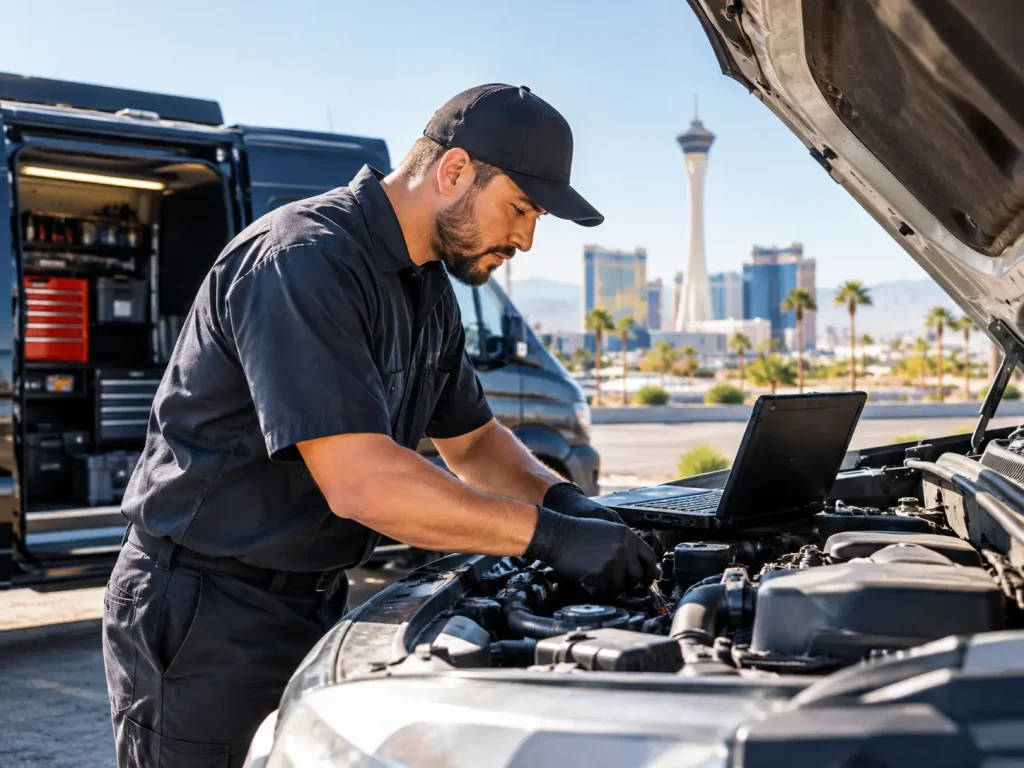
Dealing with a stolen converter is stressful, and a car that sounds like a race car is not one you want to drive across town. A mobile mechanic can come to your location, inspect the damage, explain what is needed and, in many cases, handle the repair where your car is parked. A technician can also discuss protection options that fit your vehicle, so you are less likely to face this again. Some exhaust work may require a lift or specialized equipment, and a good technician will tell you if a job needs a shop. To learn more about the benefits of this approach, take a look at why mobile mechanics are better than traditional auto shops in Los Angeles, and see how car culture meets modern convenience with mobile mechanics in Los Angeles.
Quick Prevention Checklist
- Park in a garage or a bright, busy area whenever possible.
- Consider a shield, cage or cable made for your vehicle, installed by a professional.
- Mark the converter with your VIN and take photos.
- Set up a vibration sensitive alarm or a camera where you park.
- Review your insurance coverage.
- Know the warning signs, and act quickly if something seems wrong.
Catalytic converter theft is frustrating, but a few smart habits can improve your odds. Layered protection, good parking choices and quick action make a real difference. If you want advice for your vehicle, or your car has already been hit, visit our homepage to learn more, or contact us to schedule a visit.